November 2nd, 2026 by Elisabeth Eder

Did you know that picking can account for up to 55 percent of total warehouse operating costs?
No other warehouse process ties up so many resources. Every unnecessary step, time spent searching, and picking error has a direct impact on productivity, service quality, and costs. This makes it all the more important to ask which technologies help make picking processes more efficient.This is exactly where warehouse management systems, pick-by technologies, as well as robotics and automation come into play. Here is an overview of their strengths and how they can support order picking:
Basic Warehouse Management Systems (Basic WMS) are software solutions for streamlining warehouse operations. They form the basis for efficient warehouse logistics. A Basic WMS manages inventory, coordinates orders, and ensures that all warehouse movements remain transparent and traceable.
For order picking, this means that employees receive the right orders at the right time and can navigate to storage locations via optimal routes. This reduces unnecessary walking distances and uses resources in a more targeted manner. Furthermore, a Basic WMS creates the foundation for successfully integrating other technologies.
Advantages of a Basic WMS:
Transparency of current inventory and orders
Optimized picking routes
Efficient task distribution
Better utilization of personnel and equipment
Reduced idle time
Tip: Think of a Basic WMS as your digital foundation. As your warehouse grows and operations become more complex, a modern Basic WMS can be flexibly expanded, gradually evolving into an advanced Warehouse Management System (Advanced WMS).
Searching for items is one of the greatest time factors in manual order picking. Technologies such as pick-to-light and voice picking support employees directly during retrieval and ensure a structured process.
Pick-to-Light
With pick-to-light, light signals indicate directly at the storage location which item is to be removed. Employees are visually guided through the picking process and confirm the pick directly at the compartment.
Voice Picking
With voice picking, employees receive their instructions via a headset. Communication is voice-controlled, leaving both hands free for the actual picking process. Voice picking is particularly suitable for: high picking volumes, large warehouse areas, and the picking of bulky items.
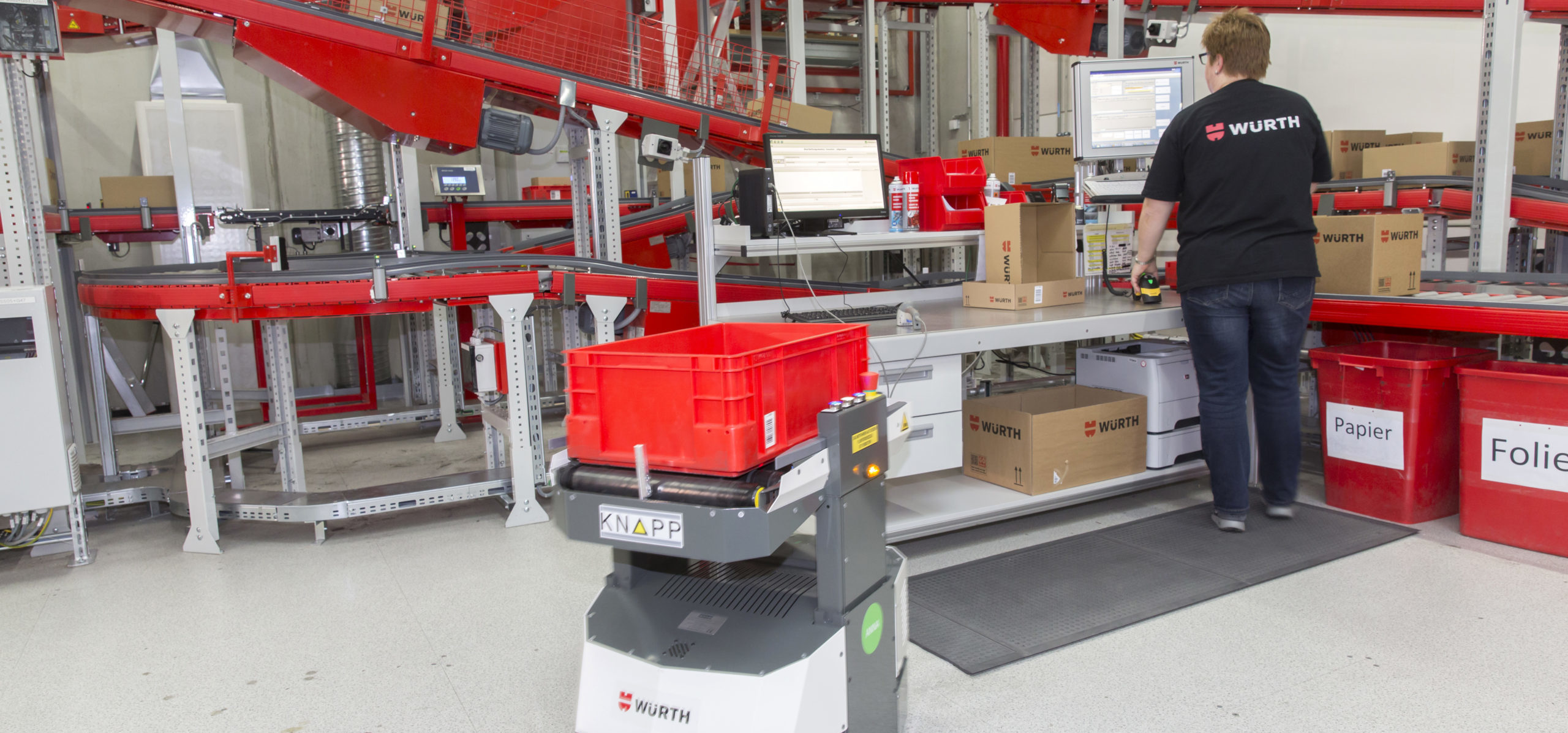
Automation in the warehouse is increasingly becoming a decisive competitive factor. Autonomous Mobile Robots (AMRs), Automated Guided Vehicles (AGVs), and goods-to-person solutions can already take on numerous tasks within order picking today.
Instead of employees having to walk long distances, the required items are brought directly to them. This allows the employees to concentrate on other important activities.
Advantages of Robotics in Warehouse Logistics:
Reduction travel distances
Increased warehouse productivity
Reduced employee workload
Support during peak order periods
Improved process scalability
Especially in combination with a powerful Basic WMS, warehouse automation can help improve throughput and process quality.
The optimal solution depends on various factors:
Order volume
Number of storage locations
Number of SKUs
Warehouse layout
Delivery requirements
Growth targets
Every optimization begins with a close look at the existing picking processes. Where is time lost, and where do errors occur? Only when these weaknesses are known can you specifically assess which technologies will provide the most effective support.